

Kategorien
Neuester Blog
How to Optimize Trolleys for Warehouse Order Picking
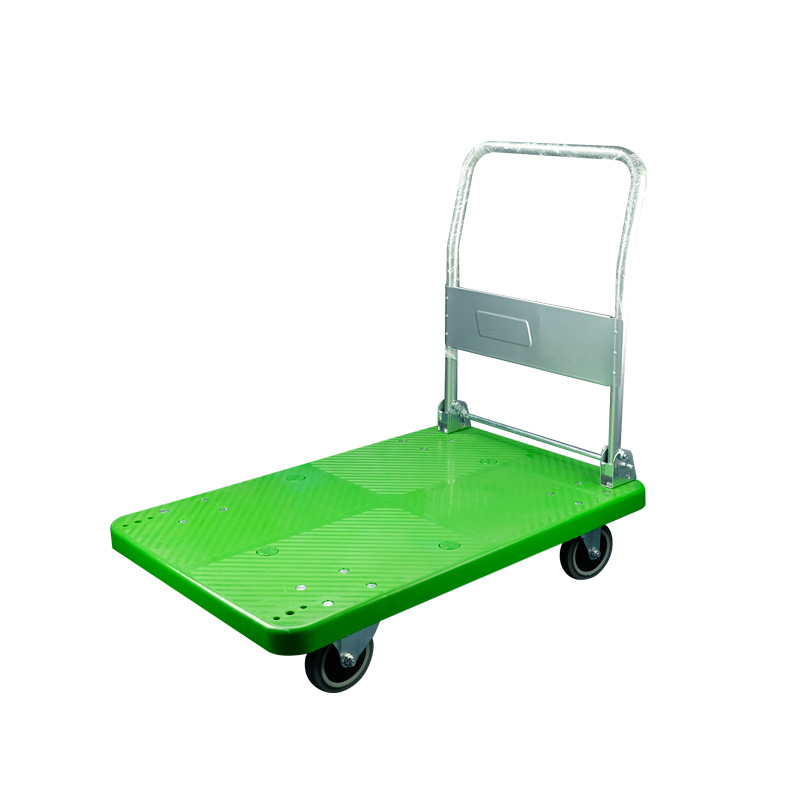
Nov 23 , 2026For warehouses handling cartons, spare parts, tools, and mixed products, a platform trolley is a practical option. A multi-layer trolley can separate smaller items, while a mesh trolley helps keep loose goods contained during movement. Guangzhou YLcaster Metal Co., Ltd. (YLcaster) offers these types of trolley solutions, including the W019XXXPP plastic foldable hand trolley, the W019XXXMC steel mesh tool trolley, and the W019XXXHPP-3 three-layer platform trolley.
The best trolley is not necessarily the one with the highest load rating. It is the one that fits the picking process, works comfortably in the available space, and supports reliable daily handling.
Explore the YLcaster trolley product range to compare platform trolleys, portable hand trolleys, and multi-layer trolley options for warehouse operations.
Before choosing a trolley, look at how employees collect and move orders. Some warehouses pick one order at a time. Others use batch picking, where a worker collects products for several orders during one route. There are also operations that move small components, tools, or spare parts from storage shelves to a packing station.
Each process needs a different trolley layout. A flat platform works well for cartons and larger packages. A multi-layer trolley gives workers separate levels for sorting smaller products. A mesh-sided trolley can be useful when picking loose items that might slide off an open platform.
Walk through a normal picking route and measure the narrowest aisle, doorway, lift entrance, and turning area. Check the trolley's overall width and handle position, not only the platform size. A larger trolley may carry more products per trip, but it can slow down picking if workers struggle to turn it between shelves.
For general warehouse picking, a platform trolley is often the simplest starting point. It provides a flat loading surface for cartons, bins, and packages. A foldable handle can also make storage easier when the trolley is not in use.
If workers pick several small items for different orders, a multi-layer trolley may be more practical. Separate shelves help organize products by order or picking stage and can reduce the need to sort everything again at the packing station. YLcaster's three-layer platform trolley, model W019XXXHPP-3, is listed with 150 kg and 300 kg load capacity options, blue color, and PP + steel construction.
For loose tools, components, or grouped goods, consider a mesh-sided design. The YLcaster W019XXXMC steel mesh tool trolley has a published 300 kg load capacity and a two-rigid, two-swivel caster arrangement. Its mesh structure provides side containment that an open platform does not offer.
The following table summarizes information published on YLcaster's product pages. Capacity options refer to the available configurations, not to one trolley carrying several different rated loads at the same time. Confirm the exact selected version before ordering.
| Product / Model | Load capacity | Material | Wheel configuration | Potential warehouse use |
|---|---|---|---|---|
|
W019XXXPP Plastic Foldable Hand Trolley |
150 / 300 / 500 kg | PP + steel | 2 rigid + 2 swivel | Cartons and general goods |
|
W019XXXMC Steel Mesh Tool Trolley |
300 kg | Steel / iron | 2 rigid + 2 swivel | Tools and loose components |
|
W019XXXHPP-3 Three-Layer Platform Trolley |
150 / 300 kg | PP + steel | 4 wheels | Small items and order separation |
For mixed carton picking, the W019XXXPP is worth comparing because it has three published capacity options. For loose products that need side containment, the W019XXXMC is a more relevant design to assess. If order separation is the main concern, the W019XXXHPP-3 offers three loading levels.
See the YLcaster W019XXXPP plastic foldable hand trolley for product details and capacity options.
Load capacity should be based on the heaviest expected picking trip, not just the average order. Include the weight of products, cartons, totes, and any containers carried on the trolley. If peak-season orders are heavier than normal, make sure the selected configuration can handle that workload.
It is also important to distinguish between the capacity of an individual caster and the rated capacity of the complete trolley. These are not interchangeable. Ask the supplier to confirm the complete trolley's rated payload for the exact model, wheel arrangement, and platform configuration.
Do not overload a trolley or stack products so high that the operator cannot see the route. Keep heavier goods low and distribute the load evenly. This helps maintain stability when turning and moving through busy warehouse areas.
Casters affect how easily a trolley starts moving, turns, and travels across the warehouse floor. YLcaster lists two rigid and two swivel casters on both the W019XXXPP and W019XXXMC models. The rigid wheels help the trolley track in a straight line, while the swivel wheels make turning easier.
Floor conditions should guide the final wheel selection. Smooth epoxy floors, concrete floors, expansion joints, ramps, and small thresholds can all affect rolling performance. Wheel material and diameter also influence noise, rolling resistance, floor protection, and wear.
YLcaster's product information describes a quiet-running caster design for the W019XXXPP. For warehouses where noise is a concern, ask the supplier to confirm the wheel material, diameter, bearing type, and load rating of the selected configuration. If the trolley will be parked on a slope or near a loading area, check whether a suitable braking option is available.
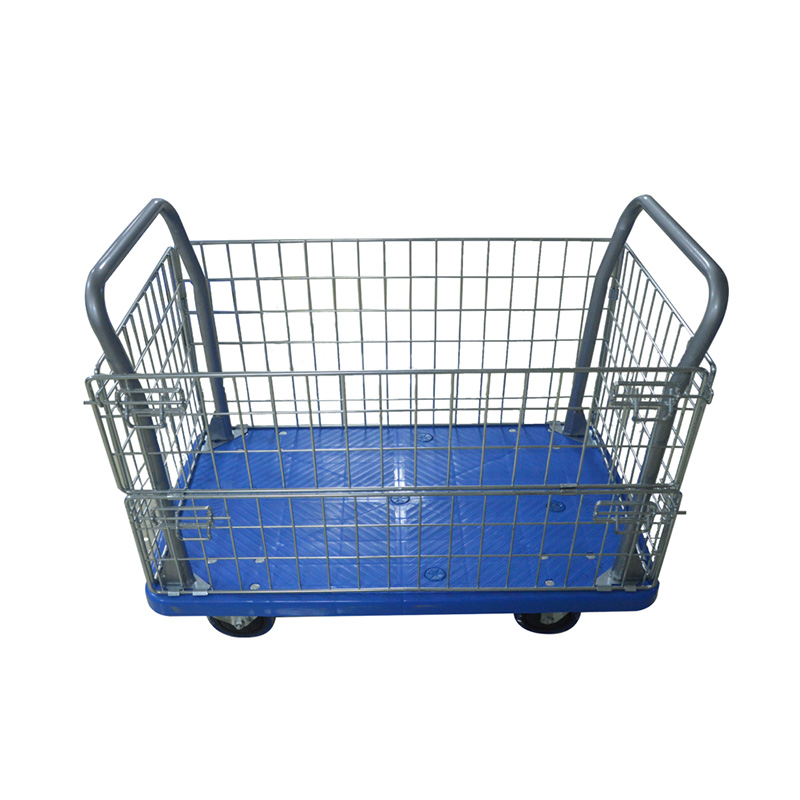
For a trolley designed to carry loose parts or tools, review the YLcaster W019XXXMC 300 kg steel mesh tool trolley and confirm its dimensions against your picking containers.
A well-designed trolley can support a better picking process, but the way workers use it is just as important. For batch picking, assign a tote or shelf position to each order. Use clear labels so products do not get mixed during the route. Place frequently picked items where workers can reach them without repeatedly bending or stretching.
For a multi-layer trolley, decide in advance how each shelf will be used. For example, the top and middle shelves can hold separate order groups, while the lower shelf carries heavier items. Keep the load balanced and avoid placing fragile products under heavier cartons.
Review the picking route regularly. Group nearby storage locations into a logical route and keep frequently used products easy to access. These small process changes can reduce unnecessary walking and repeated handling without requiring a complete warehouse redesign.
Before requesting a quotation, prepare the maximum load per trip, largest product dimensions, required platform size, aisle width, floor type, daily usage frequency, and preferred trolley structure. Also confirm whether you need a foldable handle, mesh sides, multiple shelves, brakes, or customized dimensions.
Ask Guangzhou YLcaster Metal Co., Ltd. for a product drawing or specification sheet showing the overall trolley dimensions, platform dimensions, wheel details, and rated capacity. For bulk purchasing, a sample or handling test can help confirm whether the trolley moves comfortably through the actual picking route.
YLcaster's trolley range includes platform trolleys, portable hand trolleys, and multi-layer trolleys. Its product information also identifies customization as an option for different customer requirements. Sharing clear application details helps the supplier recommend a configuration that fits your warehouse rather than relying on product photos alone.
For multi-level order separation, you can also review the YLcaster W019XXXHPP-3 three-layer platform trolley and confirm whether its shelf layout suits your picking process.
What type of trolley is best for warehouse order picking?
A platform trolley is suitable for cartons and larger goods. A multi-layer trolley helps separate smaller products or different orders, while a mesh trolley can help contain loose items. The best choice depends on the goods, picking method, and aisle layout.
What load capacity should a warehouse picking trolley have?
Choose a capacity that covers the heaviest expected load per trip, including packaging and containers. YLcaster lists the W019XXXPP in 150 kg, 300 kg, and 500 kg options. Confirm the exact selected version before purchase.
Is a three-layer trolley useful for batch picking?
Yes. A three-layer trolley can provide separate spaces for different orders or product groups. YLcaster's W019XXXHPP-3 is listed with 150 kg and 300 kg capacity options and PP + steel construction.
What is the benefit of a steel mesh picking trolley?
The mesh sides help keep loose tools, components, and grouped items within the trolley during movement. YLcaster's W019XXXMC model has a published 300 kg capacity and two rigid plus two swivel casters.
Why does caster configuration matter on a warehouse trolley?
Two rigid and two swivel casters provide a balance of straight-line tracking and turning ability. The best wheel setup still depends on aisle width, floor condition, load, and how often the trolley needs to change direction.
Can YLcaster customize warehouse picking trolleys?
Guangzhou YLcaster Metal Co., Ltd. states that customization is available for customer requirements. Buyers should provide the required dimensions, capacity, materials, caster details, and order quantity for evaluation.
What information should I send when requesting a trolley quotation?
Provide the maximum load, product dimensions, picking route, aisle width, floor type, daily usage, preferred trolley design, and required quantity. Photos or a simple warehouse layout can also help clarify the application.