

Kategorien
Neuester Blog
What Causes Premature Wear During Heavy-Duty Caster Wheels Routine Maintenance And Inspection?
Nov 02 , 2026Heavy-duty caster wheels are essential components in industrial equipment, warehouse carts, material handling systems, and manufacturing facilities. However, even high-quality industrial casters can experience premature wear when routine maintenance and inspection are neglected. Uneven loading, contaminated bearings, poor lubrication, excessive impact, and unsuitable wheel materials are among the most common causes.
For businesses using industrial caster wheels daily, understanding these problems is essential to reducing replacement costs, improving equipment safety, and extending service life. As an experienced caster wheel manufacturer, Guangzhou YLcaster Metal Co., Ltd. explains the main causes of premature caster wear and how proper maintenance can prevent them.

Premature wear usually results from a combination of operating conditions, incorrect caster selection, and insufficient maintenance. Identifying the underlying cause is more effective than simply replacing damaged wheels.
Common causes include:
YLcaster manufactures industrial caster solutions in different materials, sizes, and load capacities to meet different operating requirements. Selecting the correct heavy duty casters is an important first step in preventing premature wear.
Overloading is one of the most significant reasons for early caster failure. When a trolley carries more weight than its casters are designed to support, the additional pressure increases tread deformation, bearing stress, and bracket fatigue.
For example, a four-caster trolley does not always distribute its total weight equally across all four wheels. Uneven floors and load positioning may leave only three casters carrying most of the weight.
A practical selection formula is:
Required caster capacity = (Equipment weight + Maximum load) ÷ (Number of load-bearing casters) × Safety factor.
The following example uses a 1.3 safety factor as a planning assumption, not a universal engineering standard.
| Parameter | Example |
|---|---|
| Equipment weight | 200 kg |
| Maximum cargo weight | 600 kg |
| Total operating weight | 800 kg |
| Load-bearing casters | 3 |
| Safety factor | 1.3 |
| Required capacity per caster | 347 kg minimum |
Always consider dynamic loads, floor conditions, operating speed, and manufacturer specifications when selecting replacement casters.
Different wheel materials respond differently to friction, impact, moisture, chemicals, and temperature. Choosing a material based only on its load rating can lead to unnecessary wear.

| Wheel Material | Main Characteristics | Common Applications |
|---|---|---|
| Polyurethane (PU) | Wear resistance, good load support, floor protection | Warehouse carts, industrial equipment |
| Nylon | Hard surface, low rolling resistance, high load potential | Smooth industrial floors |
| Rubber | Shock absorption, quieter movement | Uneven floors, transport carts |
| Cast Iron | High rigidity and load-bearing capability | Heavy industrial machinery |
For example, polyurethane wheels are often suitable for industrial transportation because they combine load-bearing performance with wear resistance. Explore YLcaster polyurethane wheels to compare available material solutions.
In environments with frequent vibration or uneven surfaces, shock absorbing casters can help reduce impact transferred to the wheel assembly and connected equipment.
Regular inspections help identify small problems before they develop into expensive equipment failures. Maintenance teams should examine the entire caster assembly rather than focusing only on visible wheel damage.
| Inspection Item | What to Check | Recommended Action |
|---|---|---|
| Wheel tread | Cracks, flat spots, uneven wear | Replace damaged wheels |
| Bearings | Noise, resistance, looseness | Clean, lubricate or replace |
| Swivel assembly | Restricted rotation, excessive play | Inspect and repair |
| Mounting brackets | Loose bolts, cracks, deformation | Tighten or replace |
| Braking system | Locking and releasing performance | Adjust or replace faulty parts |
Inspection frequency should depend on workload and operating conditions. The following is a practical starting schedule, not a mandatory industry standard.
Preventive maintenance should be part of normal equipment management. Businesses can reduce premature wear by following several practical measures:
Replacement should also consider the complete caster specification, including wheel diameter, mounting type, bearing structure, brake configuration, and load rating.
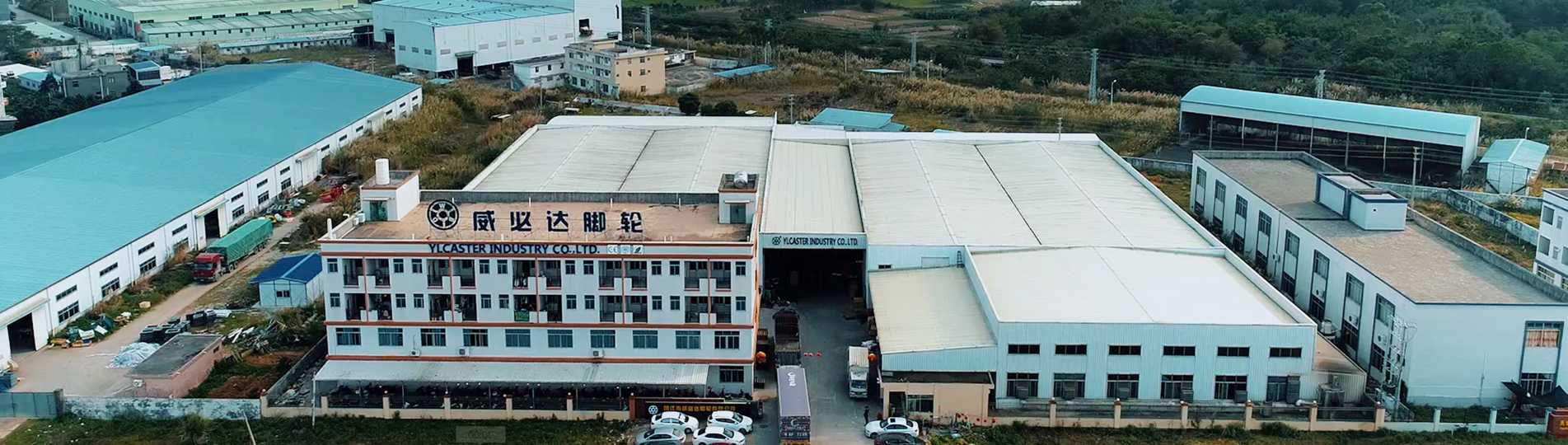
Guangzhou YLcaster Metal Co., Ltd. has manufactured caster wheels and material handling products since 1997. Based in Yangjiang, Guangdong, China, the company operates a 35,000-square-meter manufacturing facility and serves customers in more than 120 countries and regions.
YLcaster offers more than 2,000 caster styles, covering industrial, furniture, and medical applications. Its heavy-duty caster range includes 4-inch, 5-inch, 6-inch, and 8-inch models, with stated load capacities ranging from 220 lbs to 2,200 lbs for the main heavy-duty series.
Available wheel materials include polyurethane, rubber, nylon, cast iron, PVC, and other options. OEM and ODM customization is also available for different industrial requirements.
For manufacturers, distributors, and industrial equipment buyers, working with an experienced caster supplier makes it easier to match wheel materials, load ratings, and mounting configurations to actual working conditions.
Visit YLcaster's official website to explore industrial caster products or contact its technical team for product recommendations.
What causes heavy-duty caster wheels to wear out prematurely?
The most common causes are overloading, uneven weight distribution, bearing contamination, insufficient lubrication, unsuitable wheel materials, and repeated impact from rough floors.
How often should industrial caster wheels be inspected?
Daily visual checks and weekly functional inspections are a practical starting point. Monthly detailed inspections are also recommended, with more frequent checks for demanding operating environments.
Which wheel material is best for heavy-duty industrial applications?
Polyurethane is a popular choice for many industrial applications because of its wear resistance and load-bearing performance. Nylon, rubber, and cast iron may be more suitable for specific floor conditions and operating requirements.
Can lubrication extend caster wheel service life?
Yes. Proper lubrication of compatible bearings and swivel components can reduce friction and wear. Always follow the manufacturer's maintenance instructions.
How do I calculate the required load capacity for heavy-duty casters?
Add the equipment weight and maximum cargo weight, divide the total by the number of casters expected to bear the load, and apply an appropriate safety factor based on operating conditions.
When should heavy-duty caster wheels be replaced?
Replace casters when wheels develop cracks, severe flat spots, excessive tread wear, bearing failure, damaged brackets, or unreliable braking performance.
Does YLcaster provide customized heavy-duty caster wheels?
Yes. YLcaster offers OEM and ODM services, including customization of wheel materials, sizes, bracket specifications, colors, and load capacities according to project requirements.
Looking for reliable heavy-duty caster wheels? Contact Guangzhou YLcaster Metal Co., Ltd. for professional industrial caster recommendations and customized mobility solutions.