

Published: August 28, 2026 | Updated: August 31, 2026
What Is A Heavy Duty Caster
Direct Answer
A heavy-duty caster is a robust wheel, fork, axle, swivel and mounting assembly designed for higher loads or demanding service. There is no single worldwide capacity threshold that makes every caster “heavy duty”; suppliers classify families differently. A valid selection uses the exact model’s dynamic rating and also checks equipment plus payload mass, unequal load sharing, shock, speed, travel distance, floor joints, wheel diameter and tread, bearings, bracket construction, mounting strength, swivel geometry, brakes, temperature and chemicals. Heavy-duty casters are used on die carts, machinery, fabrication platforms, aerospace tooling and material-handling equipment. The complete vehicle and test conditions determine whether the caster is truly suitable.
Quick Reference Data Table
| Heavy-duty factor | Engineering question | Failure if ignored |
|---|---|---|
| Maximum mass | What are frame, payload, tools and attachments at worst case? | Overload or insufficient margin |
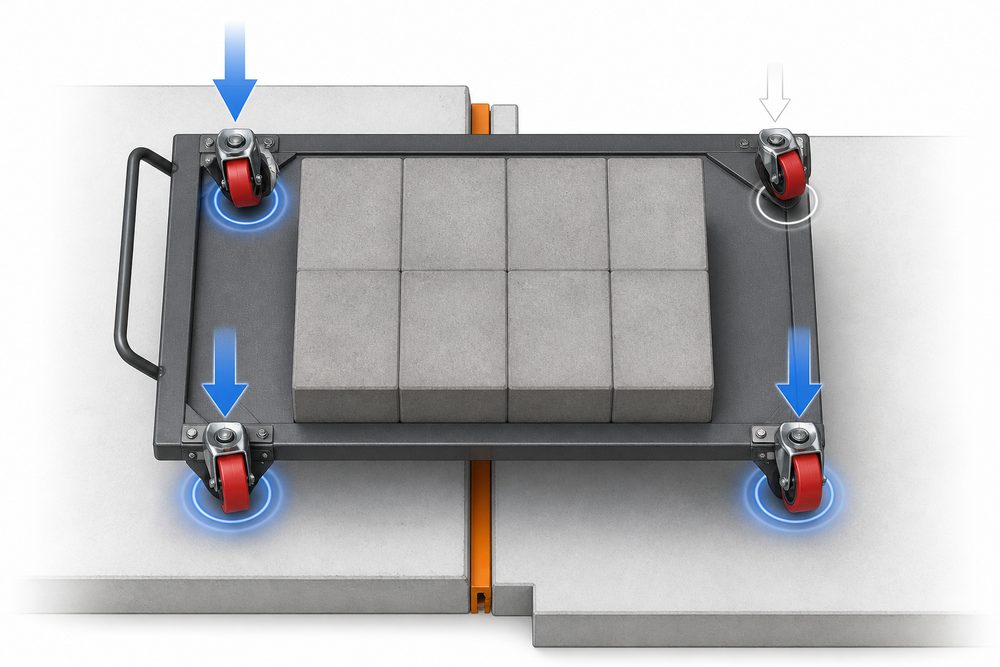
| Load sharing | Can one caster unload on uneven floors or a flexible frame? | Corner overload and premature wear |
| Shock | Are loads dropped or obstacles struck? | Bent fork, damaged tread, axle or frame |
| Speed and distance | Is movement manual, powered, continuous or towed? | Heat, wear, shimmy and bearing failure |
| Wheel design | What diameter, width, tread, core and bearing fit the route? | High effort, floor damage or bond failure |
| Bracket and swivel | Can they carry vertical, side and impact loads? | Deformation, play or steering loss |
| Mounting | Can plate, bolts, welds and frame transfer the load? | Loose fasteners or structural cracking |
| Validation | Which test represents the real duty? | Misleading comparison of headline ratings |
Heavy Duty Is a System, Not a Label
Manufacturers use light-, medium-, heavy- and super-heavy-duty labels to organize their own ranges. Those boundaries are not universal. A 500 kg-rated caster may be called heavy duty in one catalog and medium duty in another. Compare the exact construction, dynamic rating, speed, test surface and acceptance criteria instead of category names.
The heavy-duty load path begins at the equipment frame. Weight passes through the mounting plate, fasteners and fork to the axle, bearing, wheel and floor. A high-capacity wheel cannot compensate for a thin frame corner or incorrect bolts. Side loading during turns and impact at joints can govern even when static weight is below the nominal rating.
Dynamic and static capacity are different. A fixture that moves twice per year can emphasize static support and stability. A production trolley traveling every shift accumulates heat, wear and fatigue. A tow-line application adds speed and cornering. Buyers should not apply a manual rolling rating to powered towing without written model approval.
Heavy equipment can temporarily load fewer casters. A four-caster frame may rock on uneven floors, so dividing total mass by three is a common initial screen. Flexible frames, off-center payloads, ramps and loading operations may require a more conservative model. Engineering review should define the safety allowance from actual risks.
Wheel, Bearing and Bracket Design
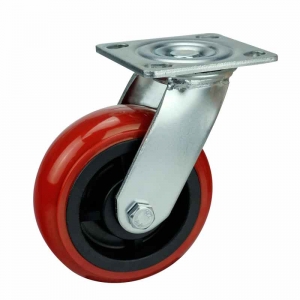
Larger-diameter wheels normally reduce obstacle force and can lower sustained push effort. Wider wheels spread load but increase scrub in turns. Heavy-duty polyurethane on iron or aluminum cores is common where capacity, wear and floor protection must be balanced. Nylon, phenolic, cast-iron or steel wheels may suit hard-duty or temperature conditions, while elastic treads can reduce noise at the cost of more deformation.
The bearing must support load, speed and environment. Roller or ball bearings reduce friction compared with a simple bore when correctly sized. Precision bearings may be needed for speed, but seals and grease must tolerate heat, contamination or washdown. Axle fit and tightening are critical: clamping the hub can create friction and rapid heating.
Pressed or welded steel brackets, reinforced forks, larger swivel races and kingpinless constructions are used in demanding families. No single design is always superior. Fork spacing, plate thickness, race diameter, offset, weld quality, finish and heat treatment must work together. A model-specific drawing makes supplier comparisons auditable.
Braking high loads needs realistic expectations. A parking brake holds stationary equipment under defined conditions; it may not be designed to decelerate a moving platform. Slope, wheel material, floor contamination and wear affect holding. For large loads, operational controls such as chocks, levelers or engineered service brakes may also be required.
How to Specify and Validate a Heavy-Duty Caster
Write the operating profile first: maximum mass, load center, caster count and layout, manual or powered movement, speed, distance, starts, turns, floor joints, ramps, impacts, temperature, chemicals and cleaning. Add required service life, maintenance access and acceptable push force. Without this profile, capacity comparisons are incomplete.
Freeze physical interfaces in a drawing. Specify wheel diameter and width, overall height, plate and bolt pattern, fork width, offset, swivel radius and brake envelope. Check caster rotation against guards, leveling feet and neighboring structures. Use fasteners and welds sized for vertical and lateral loads and document installation torque.
Validate a representative sample under the worst credible load and route. Measure starting force, running force, turning, obstacle response, noise, temperature, brake hold, fastener retention and visible damage. Factory tests can establish repeatable quality, while the customer route trial validates the integrated equipment.
Control production with identity and revision records. The purchase order should reference the approved drawing, materials, hardness, bearing, finish, rating basis, tests, labels and packaging. Require notification before any change. This prevents a visually similar replacement from entering a safety-critical vehicle.
Practical Case: Selecting Casters for a 2,000 kg Die-Handling Cart
A die cart has a 500 kg steel frame and a maximum 1,500 kg payload. It uses four corner casters and moves manually at low speed across concrete joints. Dividing 2,000 kg by three gives 667 kg per caster before allowance for off-center crane placement, joint impact and frame deflection. The team screens only models with sufficient model-specific dynamic rating under agreed conditions.
Large-diameter polyurethane-on-metal wheels are compared with harder alternatives. The floor-protection target rules out unqualified metal wheels. Two rigid and two swivel casters support long-aisle tracking, while the turning area is verified in CAD and with a loaded prototype. Plate corners, bolts and welds are reviewed as carefully as the casters.
The acceptance plan records load, route, joint height, push force, turn space, brake function, temperature and inspection after repeated cycles. Purchase price is evaluated with operator labor, floor damage, downtime and replacement interval. The selected solution is the lowest-risk lifecycle choice, not merely the highest number in a catalog.
Engineer Experience
Capacity should be treated as an entry gate. Once candidates pass it, compare push effort, steering, floor stress, heat, noise and maintenance. Oversizing without considering ergonomics can produce a cart that is technically strong but operationally poor.
Inspect how loads are placed. Forklifts, cranes and uneven payloads can create transient corner loads much higher than the average. Add bumpers or loading guides when process control can reduce caster shock more economically than unlimited hardware margin.
Measure joints and ramps. The description “smooth factory floor” often hides expansion gaps, drain channels, dock plates and debris. A five-minute route survey can prevent months of failures and operator complaints.
Factory Testing and Quality Context
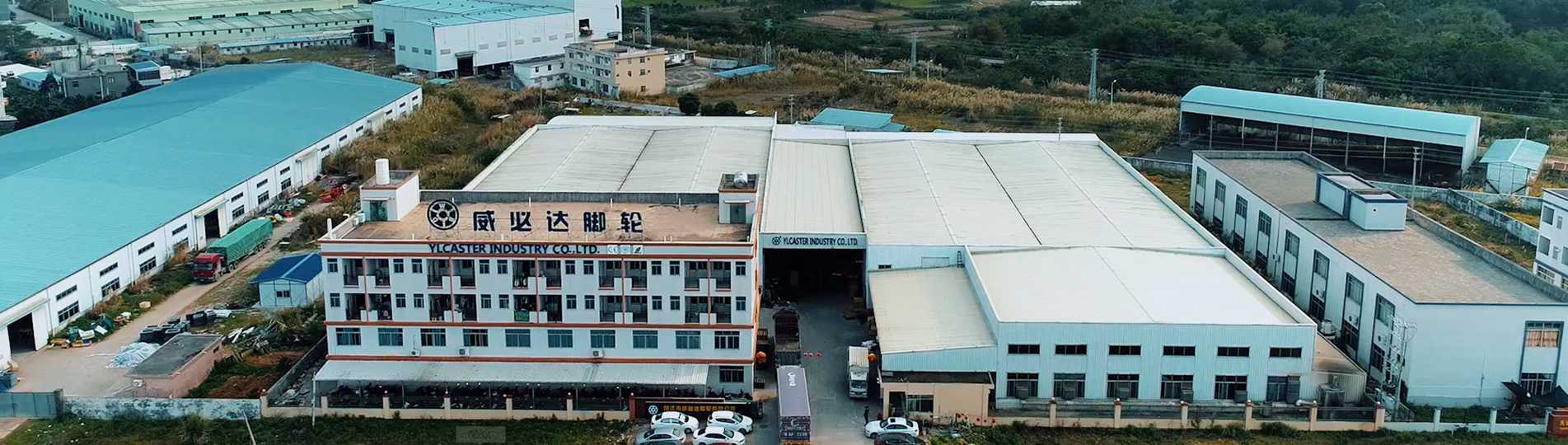
YLCASTER’s 2025 profile states that the company was established in 1997 and operates a 40,000 m² plant with about 200 employees. It reports more than 2,000 caster items and a company-level capacity range from 10 kg to 30 tons, including heavy and super-heavy families. These portfolio numbers are not ratings for every individual caster.
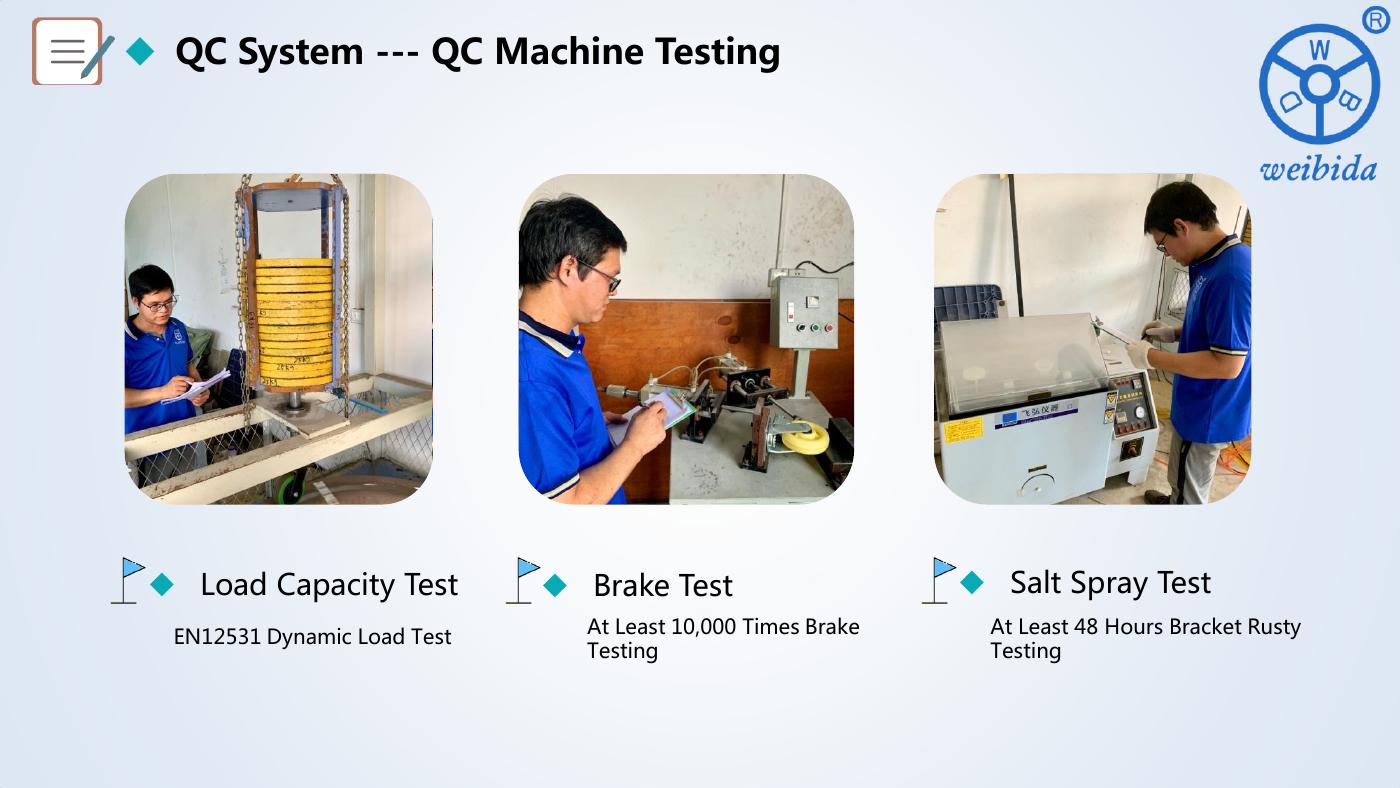
The same materials list CE, RoHS and ISO 9001 credentials and describe EN 12531 dynamic-load testing, brake testing of at least 10,000 cycles and salt-spray testing of at least 48 hours. Heavy-duty buyers should request the exact model, load, speed, obstacle, cycles and acceptance criteria, plus dimensional and material inspection records.
International Purchasing Notes
For export orders, separate technical qualification from commercial negotiation. Approve the drawing, sample, rating basis and test plan first; then compare MOQ, tooling, lead time, Incoterm, carton and pallet weight, spare parts and warranty. This protects the validated design from being changed to meet a target price.
Germany and Europe may prioritize controlled documentation; Brazil, Colombia and Peru may add long-route packing and labeling needs; Korea may emphasize drawing and finish consistency; Saudi Arabia and Kenya can add heat, dust and storage; Russia can add cold and logistics requirements. Confirm current regulations and importer needs for the final equipment.
FAQ
What load is considered a heavy-duty caster?
There is no universal threshold. Manufacturers classify ranges differently, so compare the exact dynamic rating, size, construction and test conditions.
How do I calculate heavy-duty caster capacity?
Add maximum frame and payload mass. For four casters, divide by three as an uneven-load screen, then add application-specific allowances.
Are bigger caster wheels always stronger?
Not always. Bracket, axle, bearing, hub, tread, mounting and test method also control capacity. Larger diameter mainly helps rolling and obstacles.
Which wheel material is best for heavy loads?
PU on a strong core is common, but nylon, phenolic, iron, steel or elastic materials may suit different floors, temperatures and noise needs.
Can heavy-duty casters be used for towing?
Only when the exact model is approved for the powered speed, distance, heat, impacts and turning duty.
Do heavy-duty casters need brakes?
It depends on parking and control risk. Define whether wheel, swivel, total locking or another engineered restraint is required.
Why do heavy-duty casters fail below rated load?
Shock, uneven loading, excessive speed, poor mounting, floor obstacles, heat, contamination, misalignment or unsuitable duty may exceed rating assumptions.
What should be included in a heavy-duty caster RFQ?
Include load, layout, speed, route, floor, impacts, environment, dimensions, mounting, brake, life, quantity, tests, packaging and change control.
Recommended Products
- American heavy-duty caster range: Compare sizes, wheel materials and welded industrial configurations.
- Heavy-duty caster product example: Review a published model and its specification format.
- All YLCASTER products: Explore heavy, super-heavy and application-specific caster families.
Related Articles
- Heavy Duty Caster Buying Guide
- How Casters Are Tested
- Casters For Warehouse Trolleys
- OEM Caster Manufacturer Guide
Request a Quote
Technical note: company-level factory figures describe YLCASTER’s overall portfolio, not every individual model. Confirm the selected caster drawing, test conditions, rated capacity and compliance requirements before purchase.