

Published: August 28, 2026 | Updated: August 31, 2026
How Do Caster Wheels Work
Direct Answer
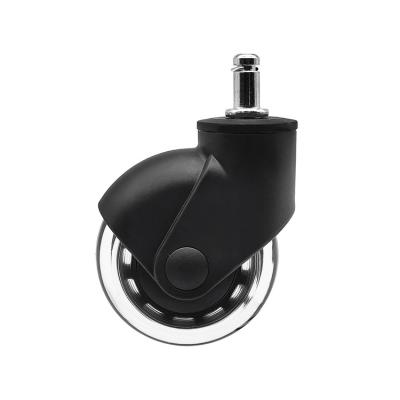
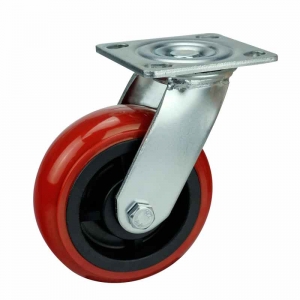
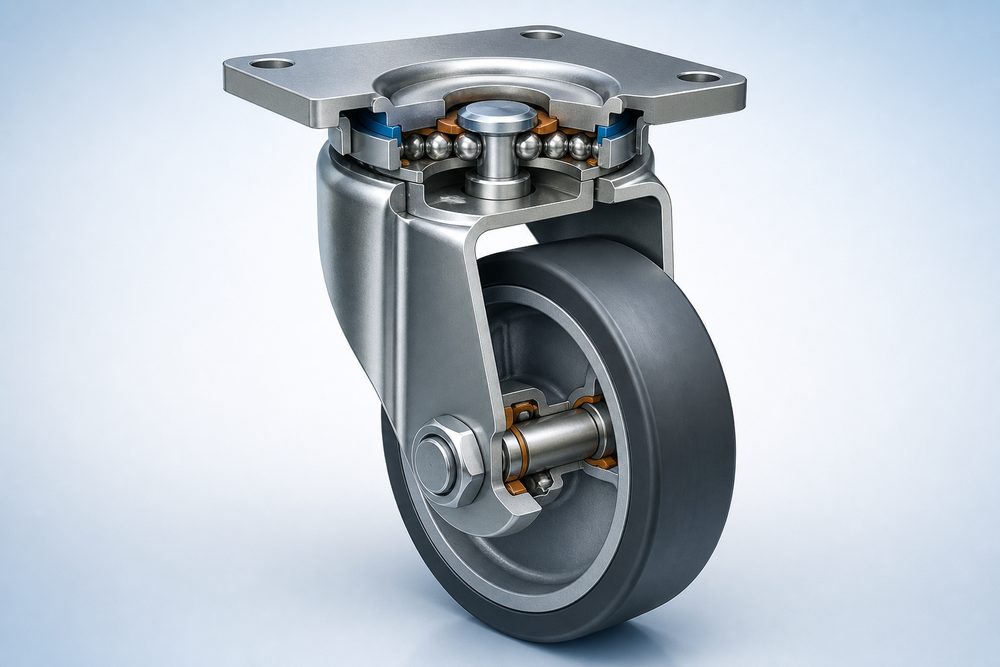
Caster wheels work by transferring equipment load through the mounting, fork, axle and bearing to a rotating wheel at the floor. The wheel reduces sliding friction to rolling resistance. In a swivel caster, the wheel axle sits behind an offset vertical pivot; floor force makes the wheel trail and align with the direction of movement. Bearings reduce friction in the wheel hub and swivel section. Brakes may restrict wheel rotation, swivel rotation or both. Real performance depends on wheel diameter, tread deformation, bearing condition, swivel offset, frame alignment, load distribution, speed, floor obstacles and maintenance. A caster is therefore a small vehicle system, not just a round part.
Quick Reference Data Table
| Operating principle | What happens | Design influence |
|---|---|---|
| Load transfer | Weight moves from equipment frame to mounting, fork, axle and floor. | Frame stiffness, plate, fasteners and rated capacity |
| Wheel rotation | The wheel turns around its axle instead of sliding. | Diameter, tread, hub and wheel bearing |
| Swivel action | The fork rotates around a vertical bearing. | Race design, lubrication, load and contamination |
| Trail | Offset puts the contact patch behind the swivel axis. | Steering response, reversal force and swivel radius |
| Tread deformation | The contact patch compresses and recovers. | Rolling resistance, heat, comfort and flat spotting |
| Obstacle crossing | The wheel climbs joints, debris or thresholds. | Wheel radius, load, speed and obstacle geometry |
| Braking | A mechanism restricts roll, swivel or both. | Pedal design, adjustment, wear and holding requirement |
| Energy dissipation | Friction and flexing create heat and wear. | Speed, distance, load, material and duty cycle |
How a Caster Carries and Moves Load
When equipment is stationary, weight passes from the frame through the mounting plate or stem, swivel section if present, fork, axle, bearing and wheel to the floor. Each interface must remain aligned. If the frame corner bends or one caster is taller, the load may concentrate on fewer wheels. That is why dividing total mass equally by caster count can be unsafe on uneven surfaces.
During movement, rolling replaces most sliding at the floor. Rolling resistance still exists because the tread and floor deform, bearings have friction and the wheel may scrub during steering. A hard, large wheel on a smooth floor often rolls with less effort than a small soft wheel, but noise, grip, shock and floor protection may favor a softer tread.
Starting force is often higher than sustained rolling force. A stationary soft wheel can develop a larger contact patch, grease and seals create breakaway friction, and swivel casters may need to reverse. Long parking under heavy load can create temporary or permanent flat spots. Test both first movement and continuous travel after the system reaches operating temperature.
When the wheel encounters a step, the axle must rise as the wheel climbs. A larger radius reduces the effective climb angle for the same obstacle. Speed and impact can multiply load on the tread, axle, fork and frame. The maximum joint or threshold should therefore be measured and included in selection and testing.
How Swivel Geometry Produces Steering
The vertical swivel axis is normally ahead of the wheel axle in the travel direction. This distance is called offset or lead. Because the contact patch trails the pivot, motion creates a moment that turns the caster into alignment. The same geometry means a reversed caster must sweep through an arc before it follows the new direction.
Offset is a design balance. More offset can make the caster respond to direction changes but enlarges the swivel envelope and increases bending moments. Too little or unsuitable geometry can make steering heavy. The correct value depends on diameter, load, speed, bracket strength and cart behavior, so it should not be changed without evaluating the complete assembly.
The swivel bearing must rotate while carrying vertical and side loads. Race diameter, ball arrangement, kingpin or kingpinless construction, seals, lubrication and fork stiffness affect play and durability. Contamination or impact can make the swivel stiff, while looseness can contribute to noise and shimmy. Maintenance rules should match the environment.
Rigid casters do not use this steering principle. Their fixed forks create a stable rolling direction. Combining rigid and swivel units turns the cart around the rigid-wheel axis. Four-swivel layouts create more freedom but require every caster to find its heading.
How Bearings, Treads and Brakes Change Performance
Wheel bearings support the axle and allow hub rotation. Plain bores are simple; roller bearings offer radial load capacity; ball or precision bearings can reduce friction and support more demanding speed when correctly sized. Bearing seals protect against dirt or moisture, while lubrication reduces wear. Over-tightened axles can clamp the hub and cancel the bearing advantage.
Tread material acts like a tuned spring and wear surface. Softer rubber or TPR can absorb vibration and lower noise, but deformation consumes energy. Polyurethane formulations can offer higher capacity and wear resistance with floor protection. Hard nylon, phenolic or metal wheels roll efficiently under suitable conditions but transmit more shock. Temperature and chemicals can change material behavior.
Brakes work through friction or mechanical blocking. A wheel brake presses against or locks the wheel; a swivel lock engages the fork orientation; a total lock combines functions. Holding a parked cart on a slope is different from slowing a moving cart. Unless a caster is specifically designed as a service brake, do not use the parking mechanism to stop moving equipment.
Every mechanism ages. Tread wear changes diameter, bearings develop play, grease attracts contamination, brake clearances shift and fasteners loosen. Periodic inspection should measure what matters: rolling effort, swivel freedom, tread damage, axle play, brake function, mounting torque and structural cracks.
Practical Case: High Push Force on a 360 kg Mobile Workstation
A mobile workstation weighs 160 kg and carries 200 kg of tooling on four swivel casters. Its nominal capacity is adequate, but operators report very high startup force after overnight parking. Inspection finds small soft wheels, a large static contact patch, two casters reversed against the initial push direction and one axle nut compressing the hub.
The team corrects axle adjustment and tests larger-diameter polyurethane alternatives with suitable bearings. It measures first-move force after eight hours of parking, continuous push force, cable-threshold impact, noise and brake access. The larger wheel reduces obstacle angle, while the chosen tread controls deformation without creating unacceptable floor noise.
The case shows why “how a caster works” matters commercially. The problem was not one missing capacity number; it was energy lost through tread deformation, wheel reversal and incorrect assembly. A measurement-led fix improves productivity without redesigning the whole workstation.
Engineer Experience
Trace force through the system. If a wheel rotates freely off the ground but the loaded cart is hard to move, inspect tread deformation, swivel reversal, alignment and floor. If the wheel is stiff even unloaded, check axle adjustment, bearing damage and contamination.
Use temperature as a diagnostic clue in powered or long-distance duty. Excessive heat at the tread, hub or swivel indicates energy loss and can accelerate bond, grease and bearing failure. Record speed, distance and load instead of describing the duty only as “continuous.”
Avoid lubricating blindly. Some sealed bearings or materials have specific maintenance rules, and excess grease can attract abrasive dirt. Follow the model instructions and keep a consistent inspection record.
Factory Testing and Quality Context
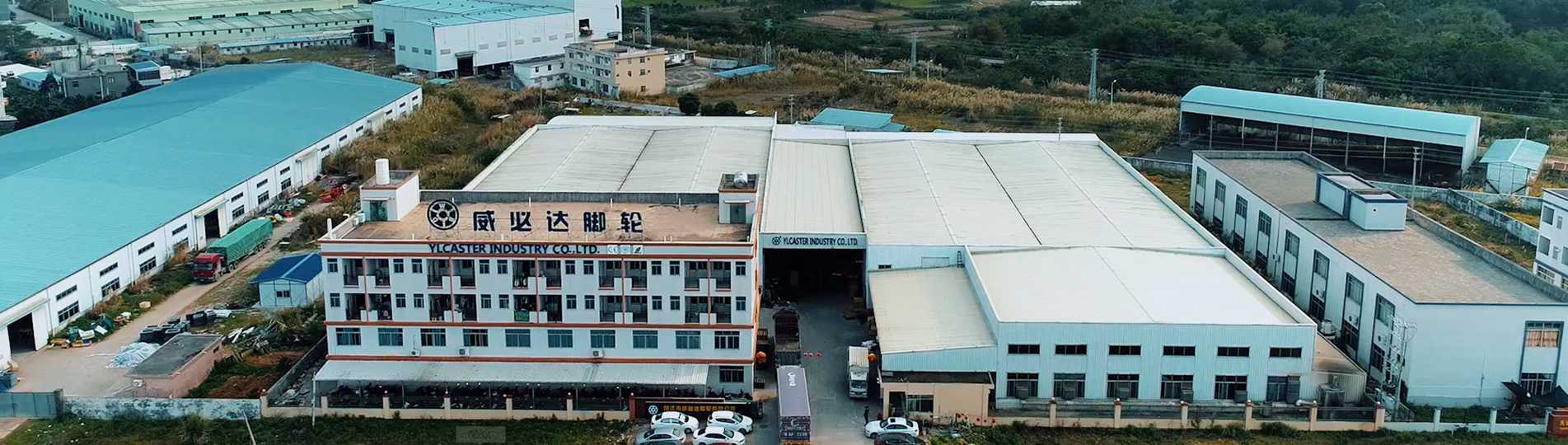
YLCASTER’s 2025 profile describes a manufacturer established in 1997 with a 40,000 m² plant, about 200 employees and more than 2,000 portfolio items. Its company-level range is stated from 10 kg to 30 tons. Such breadth covers many mechanisms, but buyers must match the operating principle and test conditions of the exact offered caster.
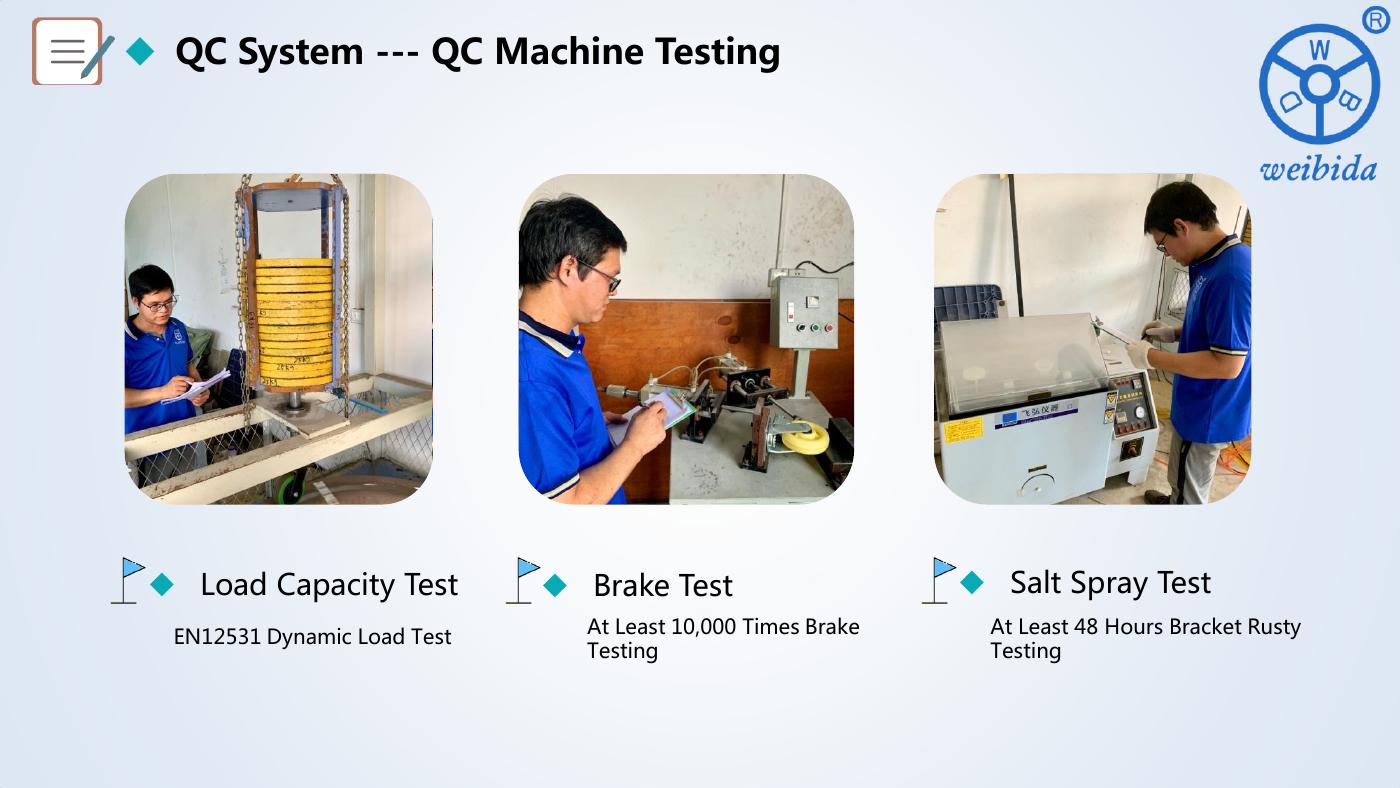
The company materials show dynamic-load, brake-cycle and salt-spray testing resources and reference EN 12531 dynamic testing, at least 10,000 brake cycles and at least 48 hours of salt spray. A useful report records load, wheel material, speed, obstacles, cycles, failure criteria and exact model revision so it can support purchasing decisions.
International Purchasing Notes
An international RFQ should describe motion, not only dimensions. State maximum mass, caster layout, push or tow mode, speed, distance per shift, number of starts and turns, floor joints, temperature, chemicals, cleaning, noise target and brake function. Attach a frame drawing so the supplier can review the load path and swivel clearance.
Commercial decisions should consider lifetime cost: purchase price, push labor, downtime, floor repair, replacement frequency and freight for spares. For Germany, Russia, Brazil, Korea, Kenya, Colombia, Saudi Arabia and Peru, also confirm local documents, labels, climate limits and importer requirements before freezing the model.
FAQ
Why do wheels reduce the force needed to move equipment?
They replace most sliding friction with rolling resistance, although tread deformation, bearings, steering and floor obstacles still consume energy.
Why is a swivel caster wheel offset?
Offset makes the contact patch trail behind the vertical pivot so floor force turns the wheel into the direction of travel.
Why are caster wheels hard to start?
Soft tread deformation, flat spotting, bearing breakaway friction, reversed swivels, excessive load and axle adjustment can all increase startup force.
How do caster brakes work?
They use friction or mechanical engagement to restrict wheel rotation, swivel movement or both. Mechanisms vary by model.
Why do caster wheels wobble?
Possible causes include shimmy, worn bearings, loose mountings, wheel imbalance, unsuitable speed, geometry or a flexible frame.
Do caster bearings need lubrication?
Some do and some are sealed or maintenance-specific. Follow the exact model instructions and environment requirements.
How does wheel diameter affect movement?
A larger diameter generally crosses the same obstacle at a lower effective climb angle and can reduce required push force.
What makes a caster fail?
Overload, shock, excessive speed, heat, contamination, chemicals, misalignment, poor mounting, wear and wrong maintenance are common contributors.
Recommended Products
- YLCASTER caster portfolio: Review wheel, bearing, mounting and bracket combinations.
- American heavy-duty casters: Compare robust constructions for higher loads and industrial routes.
- Medical caster range: Explore casters where quiet rolling and control are important.
Related Articles
- How Casters Are Tested
- Casters For Warehouse Trolleys
- Casters For Hospital Beds
- OEM Caster Manufacturer Guide
Request a Quote
Technical note: company-level factory figures describe YLCASTER’s overall portfolio, not every individual model. Confirm the selected caster drawing, test conditions, rated capacity and compliance requirements before purchase.